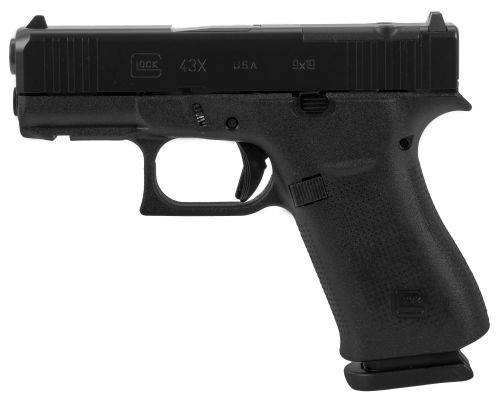
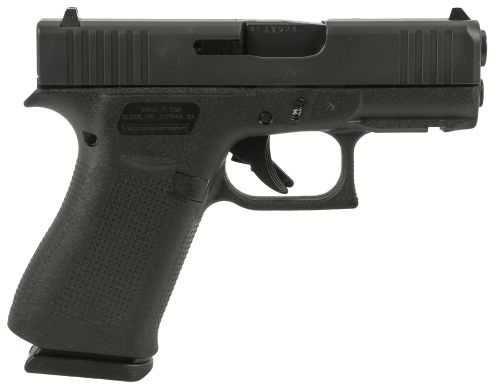
Glock Gen 5 vs Gen 4: real differences before you buy
Gen 4 Glocks are still on dealer shelves, often at a discount, and Gen 5 is the current line. They look alike, share a magazine, and differ in ways that matter to some buyers and not at all to others. This guide compares them as a shopper would: what changed, what it feels like, what it costs, and when the older pistol is the smarter purchase.
What Gen 5 changed
- Grip: the finger grooves are gone; the front strap is smooth and the magazine well is flared. Backstraps are still in the box.
- Slide stop: a lever on both sides.
- Barrel: the Glock Marksman Barrel with conventional rifling and a target crown.
- Finish: nDLC on slide and barrel, harder and more corrosion resistant than the older finish.
- Trigger: a new trigger bar, housing, firing pin safety and connector; the pull is smoother from the box, still about 5.5 pounds on standard models and about 4.5 on competition models and the Gen 5 connector.
- Frame: back to two pins, a new locking block, a beveled slide nose, and on many models front slide serrations.
- Magazines: orange followers and a front lip on the floorplate; older magazines still work.
What Gen 4 keeps
Finger grooves, which some hands like; the rough RTF texture; three frame pins; the dual recoil spring assembly that Gen 5 also uses in a revised form; the large reversible magazine catch; and the older polygonal barrel, which many shooters prefer for its durability and which is not recommended for bare lead bullets. Gen 4 pistols have the same rail, the same sight cuts and the same magazine compatibility.
In the hand
The grip is the difference most people feel first. Without grooves, the Gen 5 fits more hands and lets you place your fingers where they fall; with grooves, a Gen 4 either fits you or fights you. Try both if you can. The Gen 5 trigger is cleaner out of the box, though a Gen 4 with a minus connector and a few hundred rounds closes most of the gap. The ambidextrous slide stop matters to left-handed shooters and to anyone who uses the lever as a release.
Left-handed shooters
The Gen 5 slide stop on both sides is the single biggest change for a left-handed shooter; on a Gen 4 the lever is on the left of the frame only, under the right thumb of a left-handed grip, and releasing the slide means the support hand or the slingshot method. Both generations have the reversible magazine catch. If you shoot left-handed, the Gen 5 is worth the price difference on that alone.
Trigger detail
Gen 5 also changed the trigger geometry slightly: the new bar and housing give a shorter, more distinct wall and a reset that most reviewers describe as crisper. Aftermarket connectors and springs that fit Gen 4 mostly fit Gen 5 too, but the trigger bar and housing do not cross, so a Gen 4 drop-in trigger will not move to a Gen 5.
On the target
The Marksman Barrel groups a little tighter in most tests, roughly the difference between a three inch and a two and a half inch group at 25 yards from a rest, which no one will see in a defensive situation and every match shooter will. Reliability is equal; both generations run.
Parts and holsters
This is where the generations part ways. Gen 4 shares slides, barrels, trigger parts and most small parts with Gen 3, which means the entire aftermarket. Gen 5 has its own slides, barrels, trigger parts, extractor and recoil assembly, and the aftermarket for it is smaller, though growing. Sights, magazines and holsters cross both generations; a few tight holster molds catch the Gen 5 nose bevel. If you plan to build or modify heavily, Gen 4 is the easier platform; if you plan to shoot the pistol as it comes, Gen 5 is the better pistol.
Price
New Gen 4 pistols, where still available, and used Gen 4 pistols, which are everywhere, sell below Gen 5. Police trade-in Gen 4s with night sights are the best value in the Glock line. The difference buys a good holster and a case of ammunition.
When Gen 4 is the better buy
- A discounted new or lightly used Gen 4 at a real saving.
- A pistol you intend to modify with Gen 3 pattern parts.
- A hand that likes finger grooves.
- A model not yet made in Gen 5, or a roster state that lists the Gen 4.
When Gen 5 is the better buy
- A first pistol, shot as it comes.
- A left-handed shooter.
- A carry gun where the finish and the trigger matter and the aftermarket does not.
- Any MOS model, since the Gen 5 MOS plate system and the 43X and 48 MOS are current.
Gen 3, for completeness
Gen 3 is still made, is the only Glock on California's roster and has the deepest aftermarket of all. It gives up the dual recoil spring, the backstraps and the Gen 5 improvements, and costs the least new. For a build project it is the answer; for a pistol to shoot, Gen 5 or a good Gen 4.
Choose the model with the 17 vs 19 vs 45 guide, decide on the cut with the MOS guide, and see how the transfer works in buying a Glock online. Browse Gen 5 and Gen 4 pistols; every one ships to a licensed dealer near you.
General information, not legal advice. Current as of September 2026. Laws change; check the official source before you act.